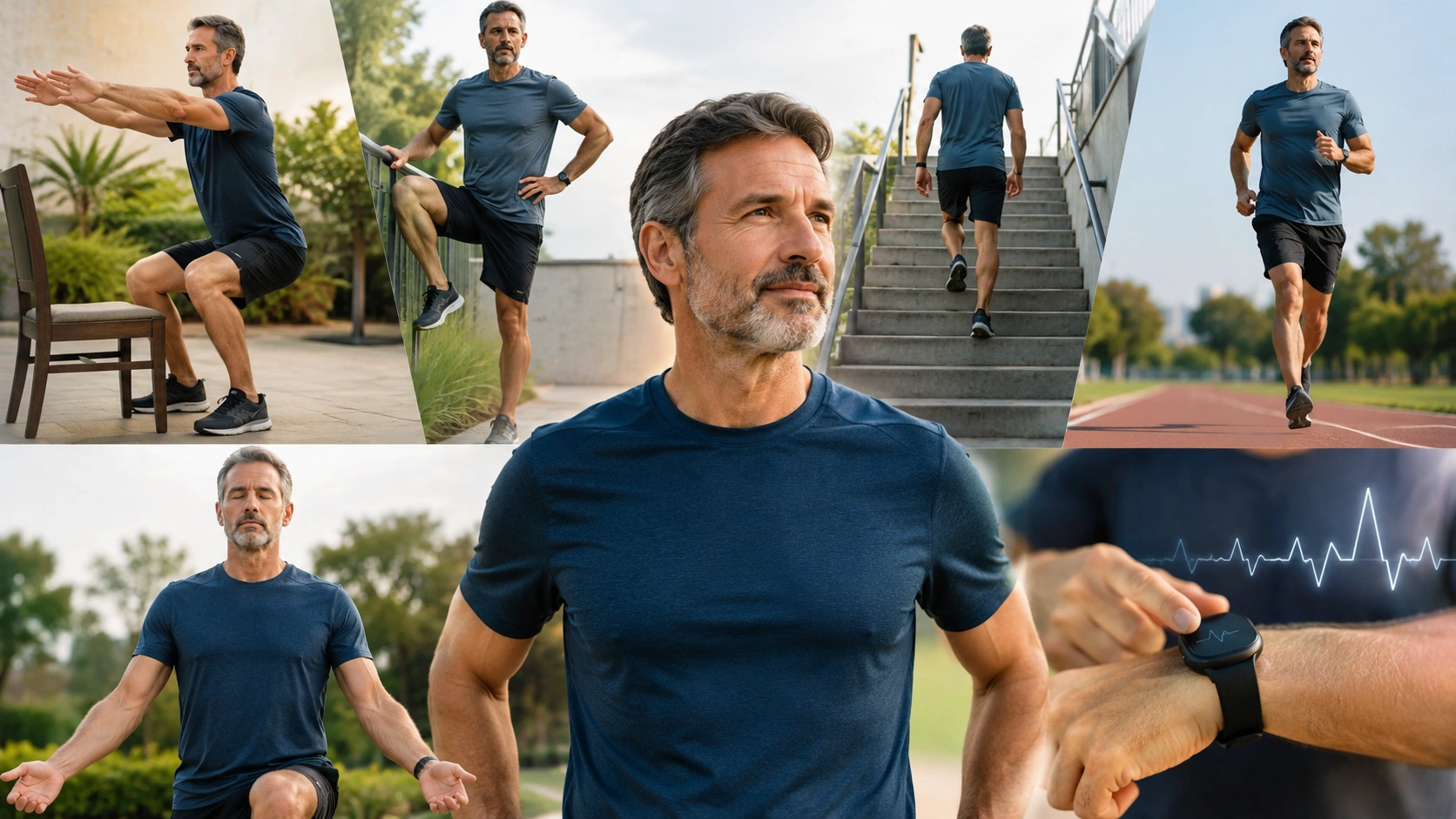
Turning 40 doesn’t mean your fitness has to go downhill. But around this age, you may start noticing changes in strength, balance, flexibility, or stamina. You don’t need a gym or expensive equipment to get a better idea of how your body is doing.
These six simple tests focus on different parts of fitness. They aren’t medical tests, but they can give you a useful picture of what you can do now and what you might want to improve.
1. Bodyweight Squat Test
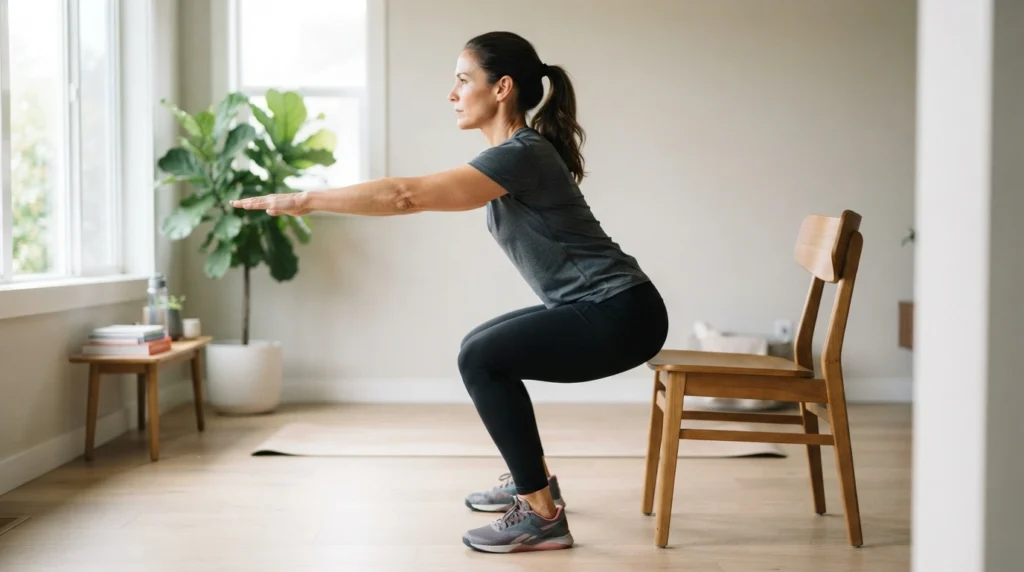
A bodyweight squat can tell you quite a bit about your lower body. Your legs, hips, and core all have to work together, while balance and movement control also come into play.
Place a sturdy chair behind you and stand with your feet about shoulder-width apart. Slowly lower yourself until you lightly touch the seat, then stand back up. Don’t sit down completely or use your hands for support.
For a 60-second challenge, count how many controlled squats you can complete in one minute. Don’t worry about doing them as fast as possible. Good form matters more.
This is also a simple way to keep track of your lower-body strength and mobility over time. Stop if you feel pain or lose control of the movement.
2. Single-Leg Balance Test
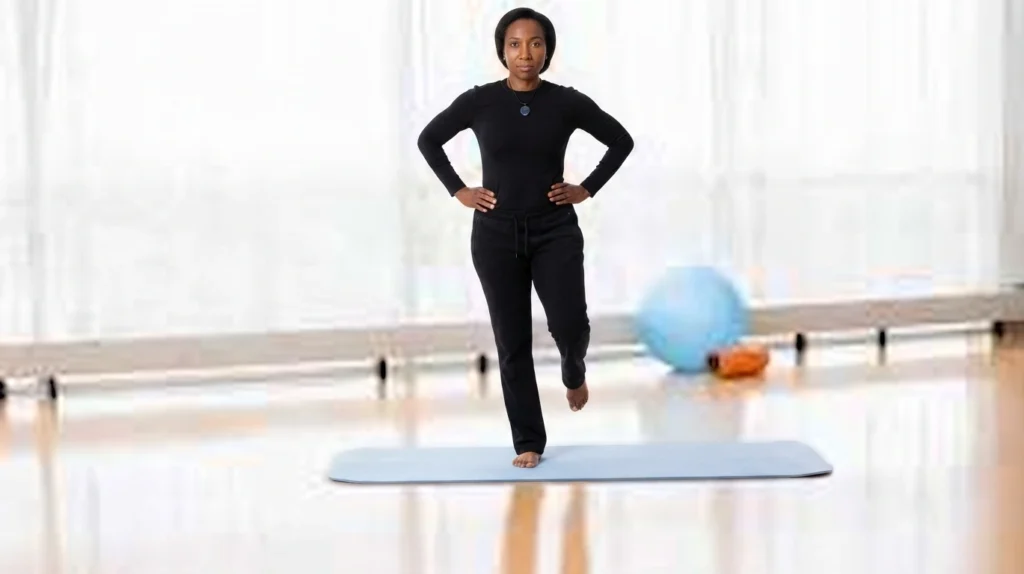
Here’s a simple question: how long can you comfortably stand on one foot?
Stand beside a wall or sturdy surface, lift one foot off the floor, and try to hold the position for up to 30 seconds. Then switch legs.
Staying balanced isn’t just about strong legs. Your eyes, inner ear, and the sensory information coming from your body all help you stay upright. Research has also linked poor balance with a higher risk of falls.
Mayo Clinic researchers have studied one-leg standing as a possible sign of aging and physical function. Their work shows that several parts of the body work together to keep you balanced.
If 30 seconds is difficult, don’t see it as a failure. It simply shows you an area you can work on. Keep something sturdy nearby in case you need support.
3. Stair Climb & Brisk Walking Test

Stairs can tell you a lot about how your heart, lungs, and muscles handle everyday effort. Try climbing two flights of stairs at a steady pace without stopping. If stairs aren’t convenient, go for a brisk walk instead. You don’t need to race. Just keep a steady pace and pay attention to your breathing.
A study involving more than 480,000 people found that regular stair climbing was linked with a lower risk of heart-related and overall health problems. However, this was an association, so it doesn’t prove that stair climbing itself caused the lower risk.
There isn’t one perfect stair-climbing time that applies to everyone. Your age, weight, fitness level, health, and even the height of the stairs can affect your result. What matters most is seeing your own performance improve over time.
4. Cooper 12-Minute Run Test
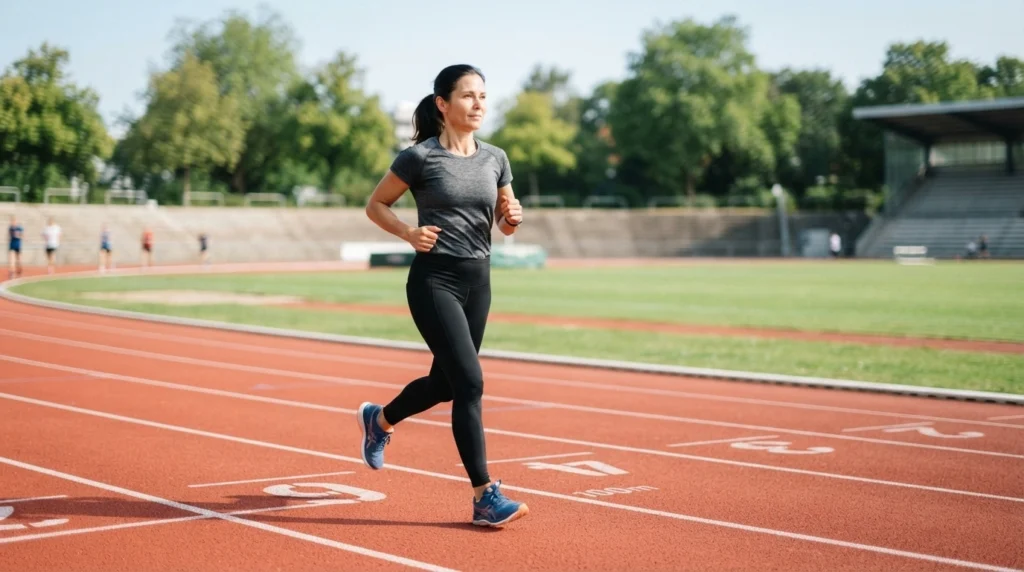
If you want to push your aerobic fitness a little further, try the Cooper 12-minute run test. The goal is to cover as much distance as you safely can in 12 minutes.
Choose a flat running track or measured route. You don’t have to run the whole time. A run-walk approach can work too, especially if continuous running isn’t comfortable for you. If you repeat the test later, use the same approach so you can compare your results. Don’t start too fast. You want a pace that you can keep going for the full 12 minutes.
The distance can also be used to estimate your VO₂max:
Estimated VO₂max = (Distance in meters − 504.9) ÷ 44.73
This gives only an estimate; laboratory testing is more accurate. Since the test is demanding, stop if you experience chest discomfort, dizziness, sharp pain, or unusual shortness of breath.
5. Eyes-Closed Balance Test
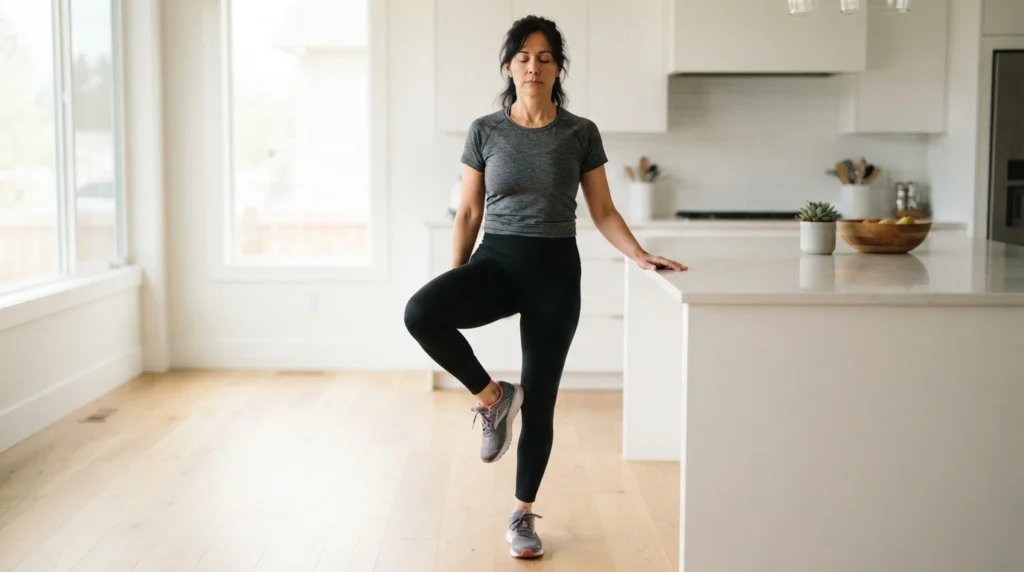
Want to make the balance challenge harder? Try standing on one leg with your eyes closed. Your eyes normally give your brain information that helps you stay balanced. Once you close them, your body has to rely more on your inner ear and its sense of position, which makes the test much harder.
Research has found more instability when people try to balance without visual information, especially as they get older.
Because you won’t be able to see what’s around you, safety matters here. Stay beside a sturdy wall or counter and keep away from stairs or anything you could trip over.
When you repeat the test, keep the same position and time limit. Holding the position longer with better control can be a sign that your balance is improving.
6. Fast-Walk Recovery Test
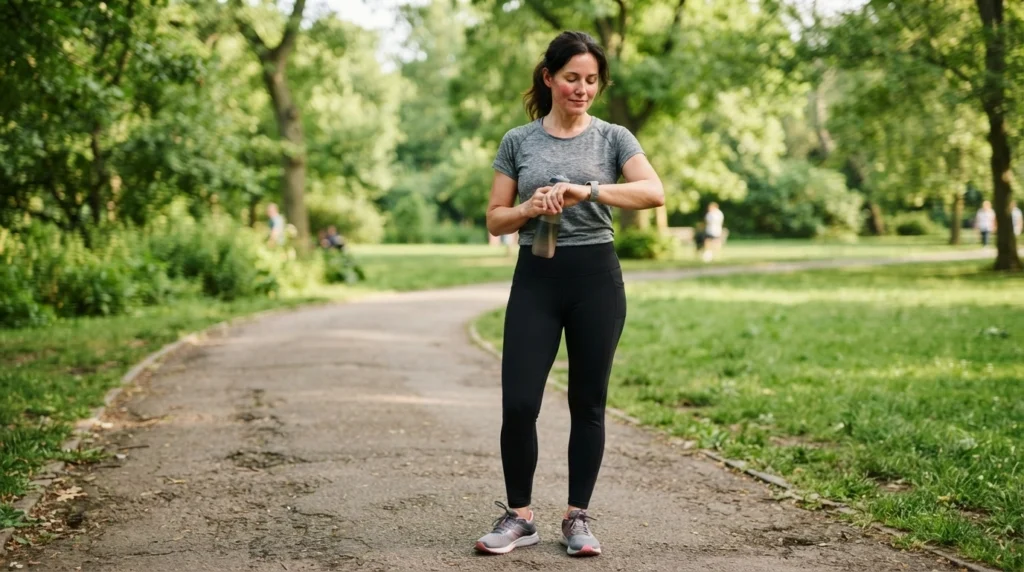
Fitness isn’t only about how hard you can exercise. Your recovery afterward matters too. Take a brisk walk and check your heart rate as soon as you finish. Wait one minute, then check it again.
Use this simple calculation:
Heart Rate Recovery = Exercise Heart Rate − Heart Rate After 1 Minute
For example, if your heart rate is 145 beats per minute at the end of the walk and falls to 120 after one minute:
145 − 120 = 25 bpm
Don’t judge your result using one fixed number. Your age, fitness level, medications, exercise intensity, and the way you measure your pulse can all affect it, and don’t focus only on the number. Chest pain, severe breathlessness, dizziness, or fainting should never be ignored.
Bottom Line
These six tests give you a quick look at strength, balance, mobility, endurance, and recovery. You don’t have to be great at all six. The more useful question is whether you know where you stand now and whether you’re getting better with time.