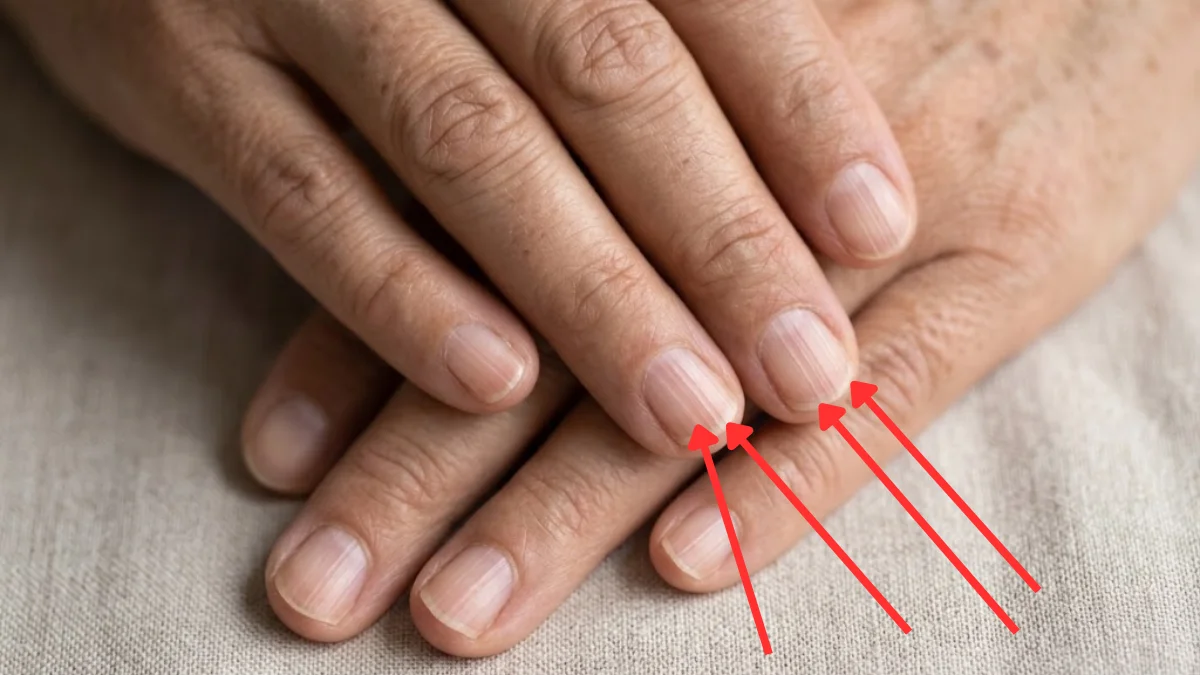
Have you noticed thin lines running down your fingernails as you’ve gotten older? Nail ridges after 40 are very common, and in most cases they are a normal part of aging. Still, some changes, like deep grooves across the nail or sudden changes in color, are worth a closer look.
This guide explains what fingernail ridges mean, what causes them, which ones are usually harmless, and when it makes sense to talk to a doctor.
Quick answer: Vertical ridges on nails that develop slowly after 40 are usually harmless and linked to aging and dryness. Horizontal ridges, sudden changes in several nails, pain, or a new dark streak deserve a medical check. Ridges alone cannot diagnose a vitamin deficiency or a thyroid problem.
What Do Ridges on Your Nails Mean?
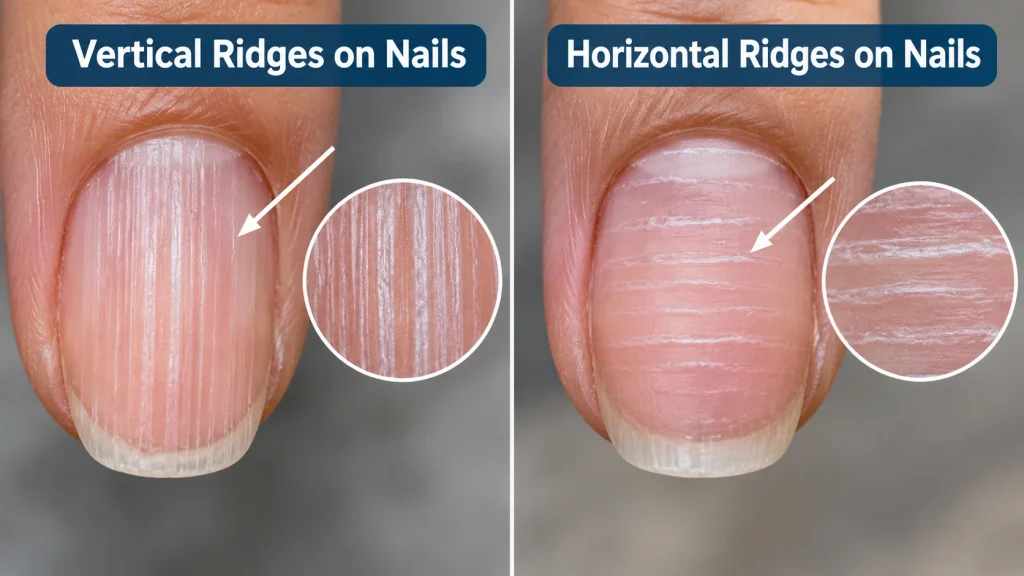
Nail ridges are raised or grooved lines on the surface of your nails. They fall into two main types:
- Vertical ridges on nails run from the cuticle to the tip.
- Horizontal ridges on nails run across the nail from side to side.
The direction, depth, and timing of the lines give clues about the possible cause. Some develop slowly over the years. Others appear after an illness, injury, or a disruption in nail growth.
Ridges alone cannot confirm a medical condition. What matters is how they look, how fast they appeared, and whether you have other symptoms.
Vertical Ridges on Nails After 40: Are They Normal?
Yes, usually. Vertical ridges are one of the most common nail changes with age. They run lengthwise and give the nail a slightly grooved or uneven surface.
As we get older, nail growth slows and nails hold less moisture, so these lines become easier to see. Frequent handwashing, cleaning products, and harsh nail treatments can make the surface look even rougher.
If your ridges develop gradually and your nails otherwise look healthy, they are often nothing to worry about. New or deep ridges that come with pain, unusual color, or a change in nail shape should not be written off as aging.
What Causes Nail Ridges After 40?
The cause is not the same for everyone. These are the most common reasons for fingernail ridges.
1. Normal aging. Vertical ridges become more noticeable over time. This is usually a natural change, not a sign of illness.
2. Dry or brittle nails. Frequent handwashing, household cleaners, and harsh polish removers dry out nails and make them rough or prone to splitting.
3. Nail injury. Repeated pressure, aggressive manicures, or damage to the nail matrix (the area where the nail grows) can change how the nail forms.
4. Nutritional deficiencies. Some deficiencies, including low iron, can be linked to nail changes. Ridges alone do not prove you are lacking a nutrient.
5. Underlying health conditions. Some medical conditions, including thyroid disorders, can affect the nails. A doctor has to look at your overall symptoms, not just your nails.
Can Vertical Ridged Nails Mean a Vitamin Deficiency?
Many people wonder whether vertical ridged nails point to a vitamin deficiency. Nutrition does affect nail health, but ridges are not a reliable way to identify a specific deficiency.
Iron deficiency, for example, can be associated with certain nail changes, but it does not explain most cases of ridged nails. Poor overall nutrition may also slow nail growth.
Taking supplements just because you have ridges may not help, and can be unnecessary or even harmful if you are not actually deficient. If your nail changes come with ongoing tiredness, weakness, or other unexplained symptoms, talk to a healthcare professional. They can decide whether a blood test makes sense.
Can Thyroid Problems Cause Ridges in Nails?
Can thyroid problems show up in your nails? Sometimes, but ridges alone are not a reliable sign. Thyroid disorders can affect nail growth and condition, and some people notice brittle nails, slow-growing nails, or nails that separate from the nail bed.
Vertical ridges by themselves are very common and are usually not caused by thyroid disease. Consider seeing your doctor if your nail changes come with symptoms such as unexplained weight changes, feeling unusually hot or cold, or constant fatigue. A proper exam and test are far more useful than trying to diagnose a thyroid problem from your nails.
What Do Horizontal Ridges on Nails Mean?
Horizontal ridges are different from the vertical lines linked to aging. These grooves run across the nail and are often called Beau’s lines.
They can form when nail growth slows or stops for a short time because of illness, injury, or other physical stress on the body. The line may show up weeks after the event, then slowly move toward the tip as the nail grows out.
A single horizontal ridge is not automatically serious. But deep grooves, lines that keep coming back, or ridges on several nails at once may need a medical check, especially if you have other symptoms.
Nail Ridges Treatment: How to Smooth and Care for Ridged Nails
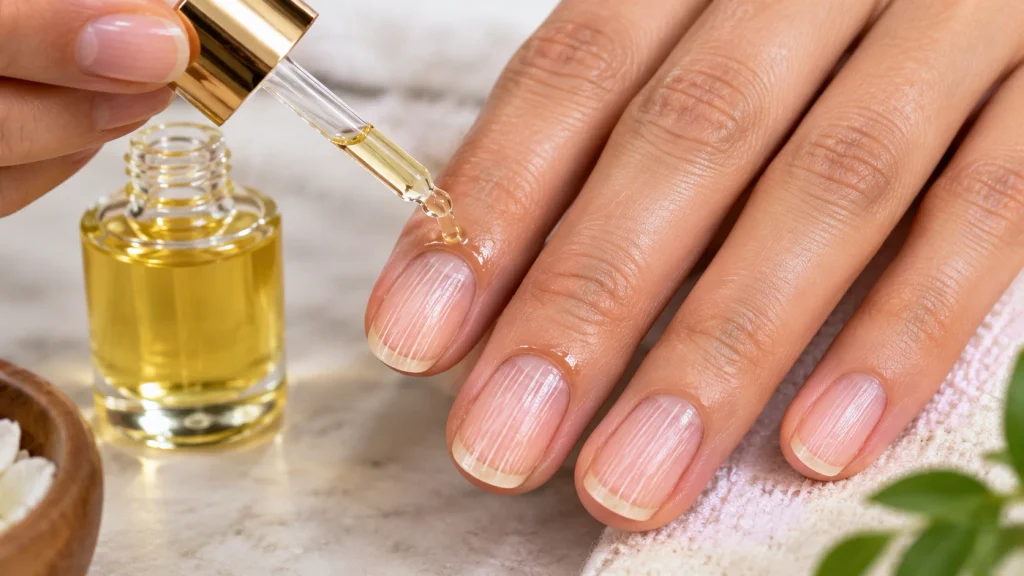
The right approach depends on the cause. Age-related vertical ridges do not need medical treatment and may not disappear completely, but good nail care can make them less noticeable and help prevent splitting and breakage.
Moisturize every day. Dry nails look more rigid. Massage a nail or cuticle oil (jojoba and vitamin E oils are popular choices) into your nails and cuticles once or twice a day, and apply hand cream after washing your hands.
Buff gently, and not too often. A soft, fine-grit buffer can even out the surface and make ridges look smoother. Buff lightly, no more than once every few weeks, because over-buffing thins the nail and weakens it.
Try a ridge-filling base coat. It fills the grooves so polish goes on smoothly. It hides ridges rather than treating them, but it is an easy option for special occasions.
Protect your hands. Wear gloves when washing dishes or cleaning, since water and harsh products dry out nails.
Go easy on nail products. Use an acetone-free polish remover, and take breaks from gel and acrylic manicures if your nails feel thin or brittle.
Don’t pick or pull at your nails or cuticles. Damage near the nail base can affect how the nail grows.
Be careful with supplements. Biotin is often promoted for nails, but the evidence is limited, and it can interfere with some blood test results. Talk to your doctor or pharmacist before starting it.
Eat a balanced diet. Enough protein, fruits, vegetables, and other nutrient-rich foods support normal nail growth.
If your ridges are new, deep, or come with other symptoms, finding the underlying cause matters more than any nail product.
When Should You Worry About Nail Ridges?
Most slow-developing vertical ridges are harmless. See a doctor if you notice:
- New, deep horizontal grooves across your nails
- Sudden changes affecting several nails
- Ongoing pain, swelling, or redness around a nail
- Nails that become very brittle, misshapen, or start to lift away
- A new or changing dark streak in a nail, especially if the color spreads into the surrounding skin
These signs do not always mean something serious, but a medical check can find the cause and tell you whether treatment is needed.
Frequently Asked Questions
Are nail ridges normal after 40?
Yes. Vertical nail ridges commonly become more noticeable with age. If they develop gradually and nothing else about your nails has changed, they are usually harmless.
What deficiency causes ridges in fingernails?
Low iron and other nutritional problems can be linked to some nail changes, but ridges alone cannot point to a specific deficiency. A doctor can tell you whether testing is needed.
Can nail ridges go away?
Ridges caused by temporary damage may grow out as the nail renews itself, which takes several months for fingernails. Age-related vertical ridges may stay, although regular moisturizing can make them look smoother.
Do ridges in nails mean thyroid problems?
Not usually. Vertical ridges are very common, and a thyroid problem is only one of many possible causes of nail changes. If you also have other symptoms, ask your doctor about a thyroid check.
Should I see a doctor for nail ridges?
Consider an appointment if ridges appear suddenly, become deep, or come with pain, color changes, nail deformity, or other unexplained symptoms.