It took just 32 seconds for a nurse to assess a care-home resident. What happened immediately afterward became the subject of a professional tribunal.
A medical emergency at a care home in England has raised serious questions about emergency assessment, CPR and clinical decision-making after a nurse decided that resuscitation should not be attempted.
The incident happened at Poplars Care Centre in Maidstone in November 2022, when a male resident stopped breathing and an ambulance was called.
According to the case heard by the Nursing and Midwifery Council tribunal, the nurse, Melissa Papandrea, assessed the resident for approximately 32 seconds before concluding that he had already died.
But why did the emergency operator tell her to start CPR?
What happened during the emergency call?

The resident had stopped breathing and emergency services were contacted. During the telephone conversation, the nurse told the emergency operator that she believed the man had already died.
The emergency operator disagreed and instructed her to begin CPR. The discussion continued as the operator and nurse disagreed over whether resuscitation should be attempted.
The nurse maintained that there was no cardiac output and that she would not commence CPR.
The detail that particularly concerned the tribunal
One of the most significant details in the case was the length and nature of the nurse’s assessment.
The tribunal found that she had not carried out an adequate clinical assessment before deciding that the resident had irreversible signs of death.
The panel was particularly concerned that the conclusion was based on the nurse’s subjective judgement rather than an adequate assessment following professional guidance.
Why this mattered?
The tribunal said the nurse could not know whether the outcome might have been different had CPR been started.
The resident was later pronounced dead
The man was subsequently pronounced dead. An inquest later determined that his cause of death was bowel ischaemia, a condition in which the blood supply to the intestines becomes restricted or is cut off.
The later inquest finding and the professional tribunal were examining different aspects of the incident. The tribunal’s concern focused on the nurse’s clinical assessment and her decision not to begin resuscitation.
What did the nursing tribunal decide?
The Nursing and Midwifery Council’s Fitness to Practise Committee concluded that the nurse had failed to carry out an adequate clinical assessment before deciding that the resident showed irreversible signs of death.
The panel described proper assessment in such circumstances as a fundamental responsibility within nursing practice.
The tribunal was also troubled by the fact that the decision was based on the nurse’s personal judgement rather than a sufficiently established clinical assessment.
Why CPR decisions require careful assessment?
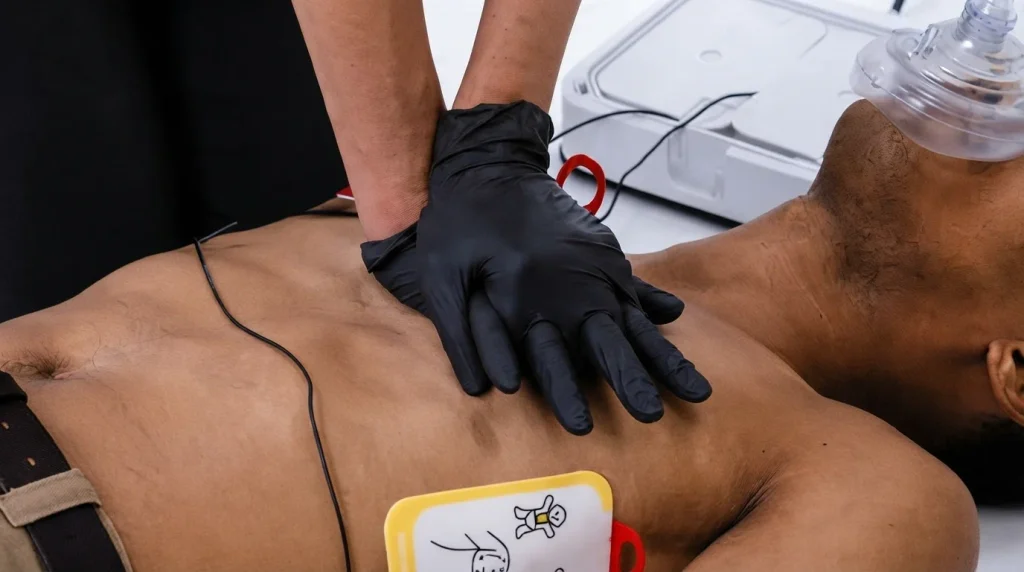
Cardiac arrest is a medical emergency in which rapid recognition and appropriate resuscitation can be critical. Decisions about whether CPR should be attempted depend on the patient’s circumstances, clinical findings, existing treatment decisions and applicable professional guidance.
This case illustrates why emergency situations can be complicated: a person may appear to be dead, while emergency responders may still instruct those present to begin resuscitation.
It also demonstrates why healthcare professionals are expected to follow established assessment procedures rather than relying solely on an immediate personal impression.
The bigger lesson from the case
The most striking detail may be the 32-second assessment, but the wider issue is much more important than the number itself.
In an emergency, clinical decisions can have enormous consequences. Proper assessment, communication with emergency services and adherence to professional protocols can all become crucial when every moment matters.
The case also serves as a reminder that an emergency telephone operator and healthcare professional may have different information available to them at the same moment. Clear communication and appropriate clinical procedures therefore matter enormously.
32 seconds became a major point in the case.
But the tribunal’s central concern was whether the patient’s condition had been properly assessed before CPR was refused.
A note about this report
This article summarizes a reported professional disciplinary case. It does not independently establish every fact beyond the findings described in the source material. The case should not be used as a guide for making CPR decisions. In a real medical emergency, follow emergency-service instructions and established medical guidance.
This case raises an important question about emergency decision-making.
Share the story if you think more people should understand why proper emergency assessment matters.