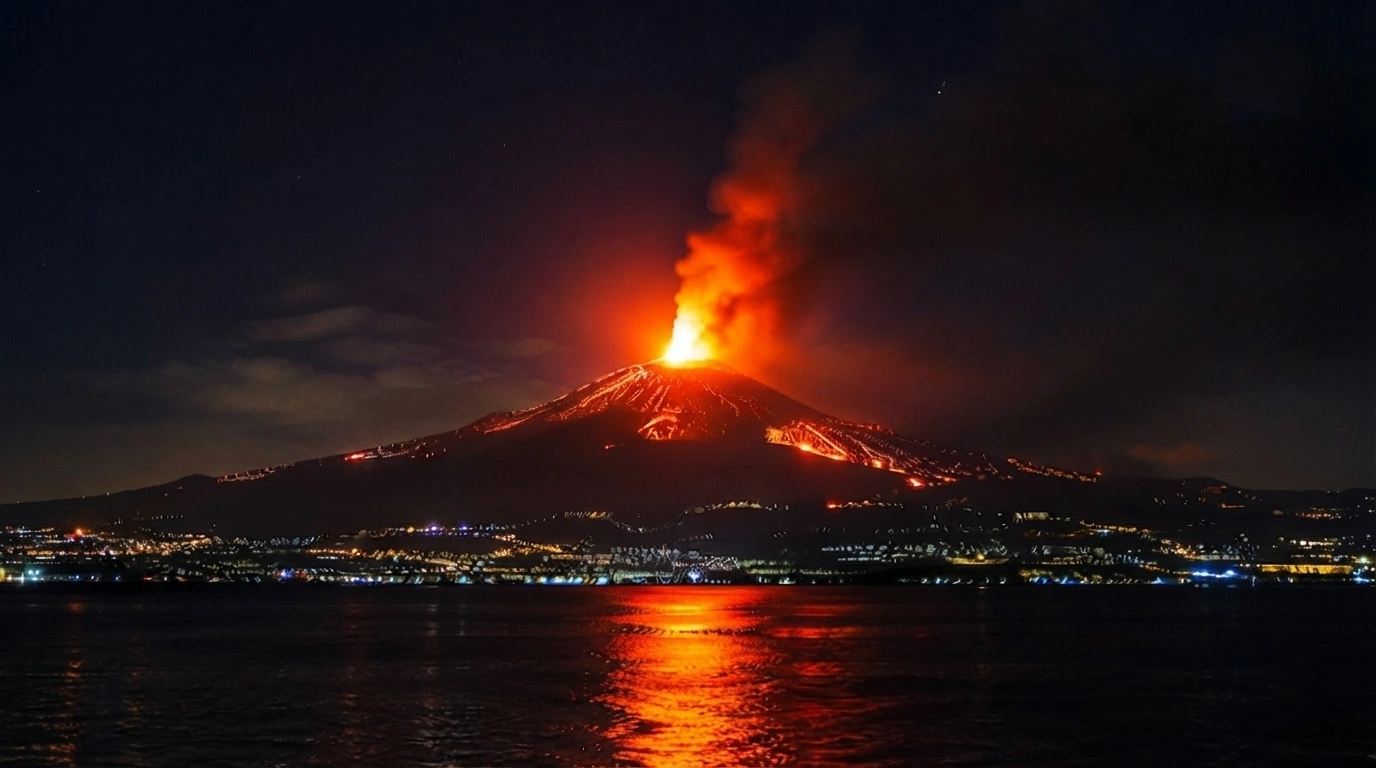
A powerful volcanic eruption from Mount Etna in Sicily, Italy, UK has caused major disruption to air travel, with hundreds of flights cancelled or diverted because of thick volcanic ash in the atmosphere.
Europe’s highest and most active volcano started its latest activity in Sicily on 6 August, with experts noting an unusual amount of ash is being spewed out.
Mount Etna, one of Europe’s highest and most active volcanoes, entered a new period of activity in early August. The eruption produced significant amounts of ash, which spread across areas near the volcano and affected nearby air routes.
Catania Airport Hit by Ash Cloud
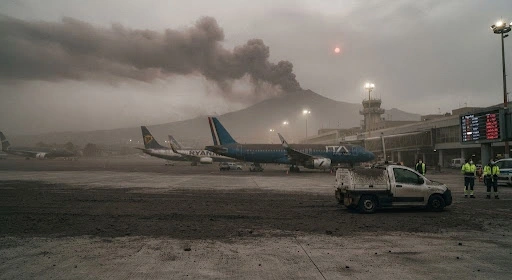
The biggest impact was felt at Catania Fontanarossa Airport, Sicily’s main airport and one of Italy’s busiest. Authorities repeatedly suspended flights because ash in the air can be dangerous for aircraft, particularly because it can damage or disrupt jet engines.
During the disruption, hundreds of flights were cancelled, while many others were redirected to airports including Palermo, Trapani, Comiso and Lamezia Terme. Thousands of passengers were left waiting for alternative flights and transportation.
Around 700 flights were cancelled during the disruption, while hundreds of others were redirected to alternative airports. Reports later indicated that around 36% of nearly 2,000 scheduled flights between August 6 and August 12 were cancelled, with more than 600 flights rerouted.
Why Is Volcanic Ash Dangerous for Planes?
Volcanic ash is not like ordinary smoke. It contains tiny particles of rock and minerals that can enter aircraft engines at high temperatures. These particles can melt inside an engine and potentially damage critical components.
For this reason, aviation authorities closely monitor volcanic ash clouds and may temporarily close airports or change flight routes when conditions become unsafe.
Flights Begin to Resume
There was some relief for travellers on August 15, when authorities downgraded Mount Etna’s aviation alert from red to orange. Catania Airport subsequently restarted incoming and outgoing flights.
However, airlines have warned that passengers should continue checking their flight status before travelling, as volcanic activity can change quickly.