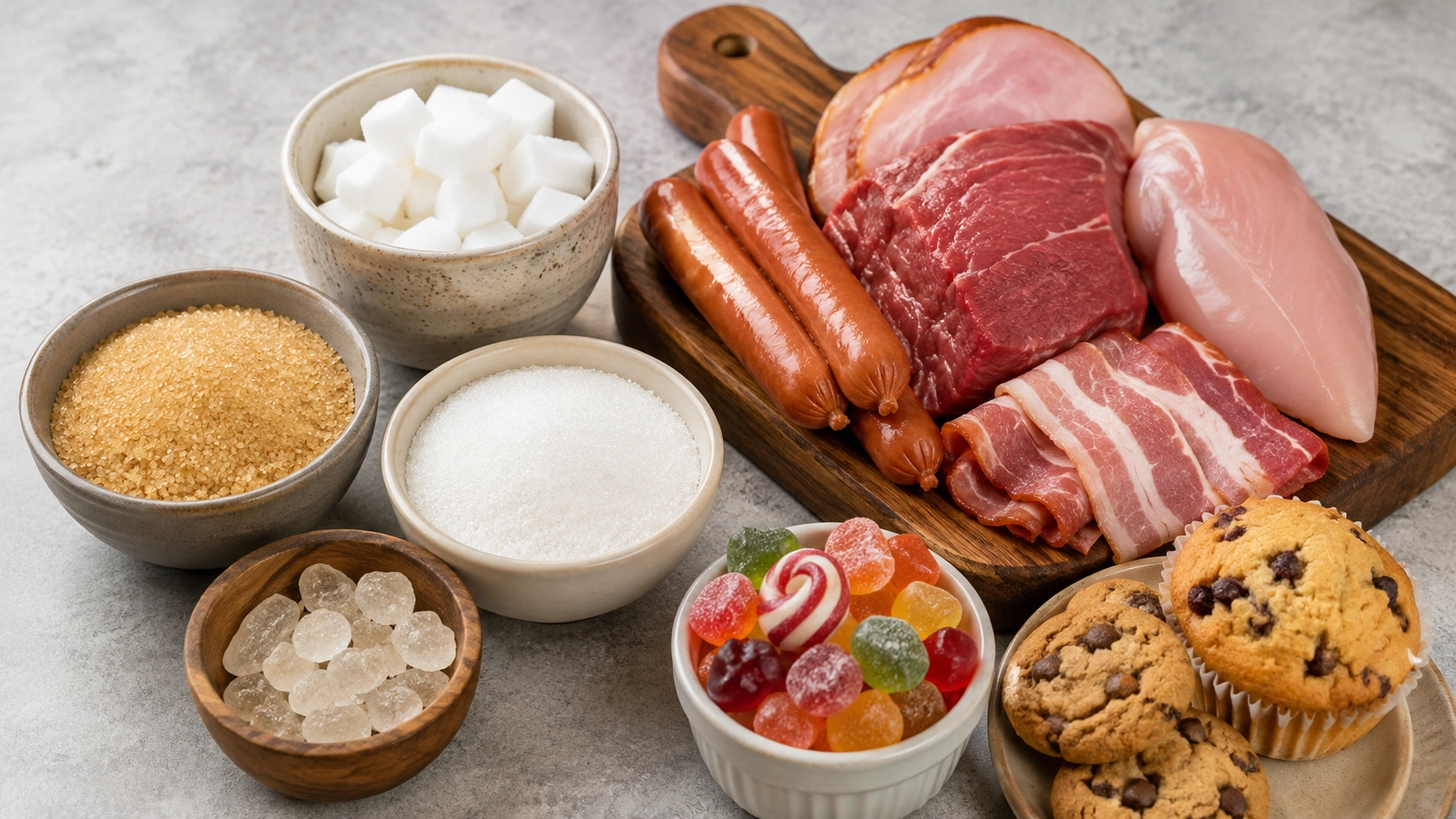
Sugar often gets pulled into conversations about cancer. You’ve probably seen the claim that sugar “feeds” cancer and that cutting it out can somehow starve cancer cells.
It sounds convincing, but the science is more complicated. According to the National Cancer Institute, there’s no evidence that eating sugar causes cancer or that removing sugar from your diet will make an existing tumor shrink. That doesn’t mean eating unlimited amounts of sugar is a good idea. Too much added sugar can contribute to weight gain, and excess body weight is associated with a higher risk of several cancers.
So if sugar isn’t the cancer culprit many people assume it is, which foods deserve more attention?
1. Processed Meat: A Food Worth Limiting
Bacon, sausages, ham and deli meats are everyday foods for many people. But when it comes to cancer risk, processed meat has a much clearer warning attached to it than sugar does.
Processed meats are preserved or prepared through methods such as curing, smoking, salting or fermentation. The International Agency for Research on Cancer (IARC) classifies processed meat as carcinogenic to humans, based on strong evidence that consuming it can cause colorectal cancer.
That classification can sound frightening, but it doesn’t mean that eating a few slices of bacon guarantees you’ll develop cancer. Cancer risk is influenced by many factors, including how much processed meat you eat and how frequently you eat it.
Research reviewed by the World Cancer Research Fund has found that the risk of bowel cancer rises as processed meat consumption increases. In practical terms, this is less about never eating a sausage again and more about not making processed meat a regular part of every meal.
Why Is Processed Meat a Concern?
There isn’t one single ingredient that explains the entire connection.
Certain processing methods can result in the formation of N-nitroso compounds, some of which may damage cells. Cooking meat at very high temperatures can also create compounds such as heterocyclic amines (HCAs) and polycyclic aromatic hydrocarbons (PAHs).
Scientists are still studying exactly how these substances may contribute to cancer. What is clearer is the overall association between higher processed-meat consumption and colorectal cancer.
So rather than focusing on one ingredient, it makes more sense to look at the bigger picture: how often processed meat appears in your diet and what foods you’re eating alongside it.
2. Red Meat: The Risk Is Different
Red meat is another food that often gets lumped together with processed meat, but the two aren’t classified the same way.
Beef, lamb, pork, goat and other mammalian meats are considered “probably carcinogenic to humans” (Group 2A) by IARC. The strongest evidence again involves colorectal cancer.
That doesn’t mean you need to give up steak or lamb completely.
The World Cancer Research Fund recommends keeping red meat consumption to moderate levels, suggesting roughly three portions a week, or about 350–500 grams of cooked red meat.
Preparation may also play a role. Grilling, barbecuing and pan-frying meat at very high temperatures can produce HCAs and PAHs. These compounds can damage DNA in laboratory studies, although translating those findings into actual cancer risk in humans is more complicated.
For someone who occasionally enjoys a steak, this isn’t necessarily a reason to panic. The bigger issue is a diet where large portions of red meat show up frequently.
Smaller servings, along with vegetables, beans, lentils, fish or poultry, can make the overall diet more varied without requiring you to completely eliminate red meat.
So, What About Sugar?
This is where a common cancer myth needs some clarification. Cancer cells use glucose for energy. But so do healthy cells. That basic fact is sometimes turned into the much bigger claim that eating sugar directly makes cancer grow.
The National Cancer Institute says there is no evidence that eating sugar makes cancer worse or that stopping sugar will cause an existing cancer to shrink. Still, that doesn’t make sugary foods harmless.
Soft drinks, sweets, desserts and other foods high in added sugar can provide a lot of calories without offering much nutritional value. Eating them frequently can make weight gain easier. And because excess body weight is associated with an increased risk of several cancers, keeping added sugar under control is still a sensible part of a healthy diet.
In other words, you don’t have to fear sugar as if it’s directly feeding a tumor. But you also don’t want a diet built around sugary drinks and desserts.
What Should You Eat Instead?
Rather than trying to identify one “bad” food and eliminate it, look at what your usual meals actually contain. Vegetables, fruits, whole grains, beans, lentils, nuts and other minimally processed foods can form the foundation of a healthier eating pattern. You can still include meat, but processed meat is better kept to a minimum and red meat is best eaten in moderate portions.
There are also plenty of easy swaps. Fish, poultry, beans and lentils can replace some of the processed or red meat in your meals without making your diet feel restrictive.
The bigger takeaway is simple: cancer prevention isn’t about finding one food to blame.
Your overall eating pattern matters much more than whether you occasionally eat sugar, a burger or a steak. Focus on eating a wider variety of nutritious foods, limit processed meat, keep red meat moderate and avoid letting added sugar dominate your diet.