
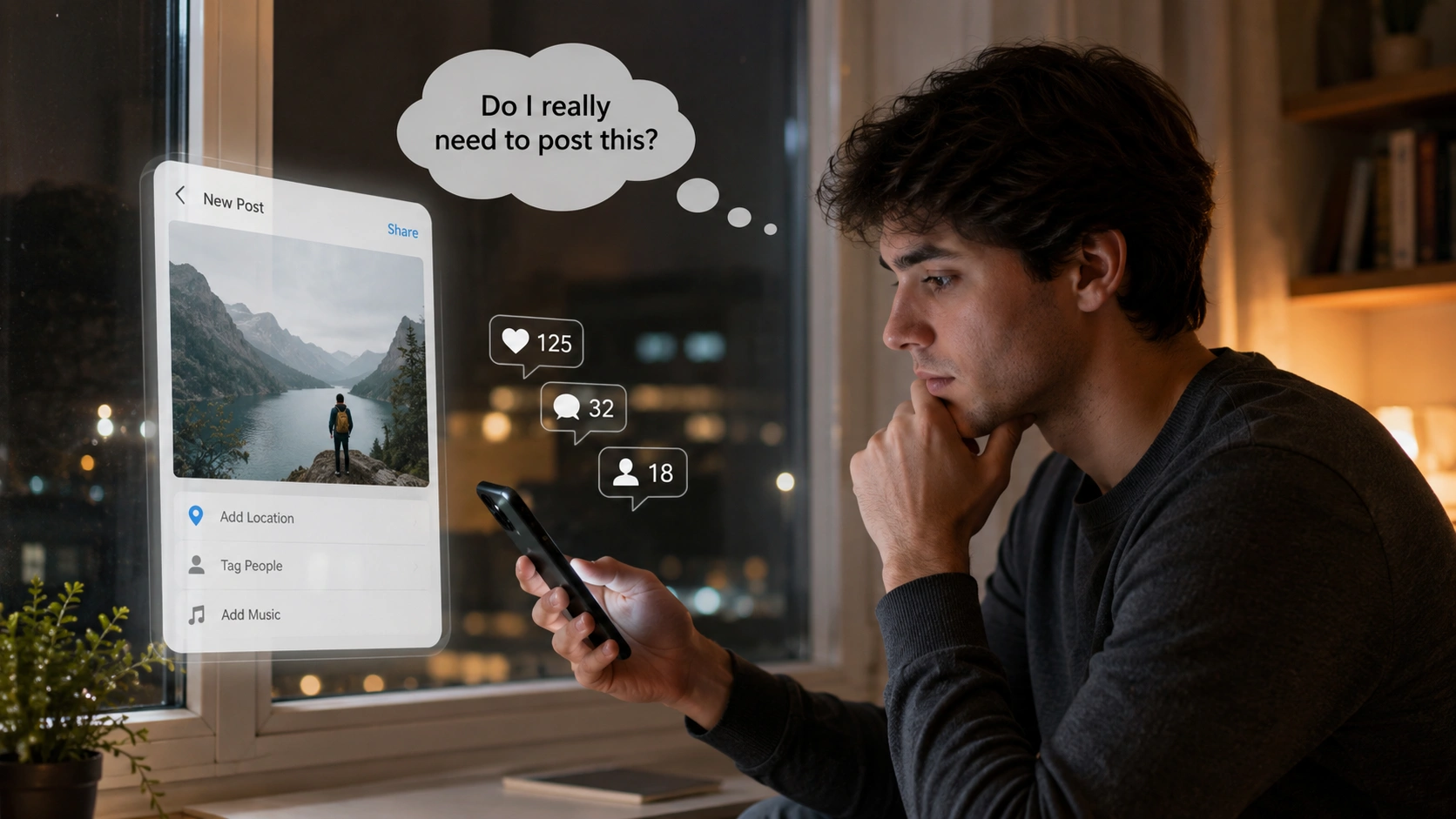
You probably know someone like this.
They are always on Instagram and watch stories, like posts, follow what’s trending and somehow know what everyone is up to. But open their own profile and there isn’t much to see.
It can make you wonder what the reason is. Are they private? Shy? Maybe they just don’t care much about social media?
There isn’t one simple answer. People use these platforms in completely different ways. Some enjoy sharing their lives, while others would rather see what everyone else is doing and keep their own life out of the feed.
Here are a few things that can help explain why people rarely post on social media.
They May Simply Want More Privacy
Putting your personal life online isn’t something everyone is comfortable with.
I understood this a little better after a trip when I posted a few stories. Later, someone messaged me and mentioned things about me that I hadn’t told them. They had picked up those details from what I had shared online.
I didn’t like that feeling, so I deleted the posts.
It was a small thing, but it made me think about how much information can be pieced together from a few photos and stories. Where you are, who you’re with, what you’re doing and sometimes even details you never intended to share can become obvious.
They can use social media every day and still keep their own lives mostly private. For them, social media privacy is less about disappearing from the internet and more about deciding what other people get to know.
Privacy is also part of having personal boundaries. Not everyone wants hundreds of followers, acquaintances or strangers to have access to their everyday life.
So sometimes the reason someone rarely posts is pretty straightforward: they would rather keep certain things to themselves.
Not Every Good Moment Needs to Become a Post
There are also people who don’t think about posting in the first place. They go somewhere nice, have dinner with friends, take a holiday or do something they’ve been looking forward to. They enjoy it, take a few pictures perhaps, and move on.
The thought of turning the moment into a post simply doesn’t occur to them or it isn’t important enough to bother.
They can still spend plenty of time on social media. They scroll through their feed, watch videos, follow news and check what their friends are doing. They just don’t feel the same need to add their own updates.
For these people, a good experience doesn’t need an audience to feel like a good experience.
“Not everything needs to be shared.”
That can also affect self-disclosure on social media. People differ in how much personal information they are comfortable putting out in public, and some naturally keep that boundary much smaller.
They Prefer Watching Rather Than Posting
This is probably one of the easiest types to recognize.
They know what’s happening online because they’re there all the time. They just aren’t saying much.
They watch your story. They read the comments. They look at someone’s vacation photos. They follow a trending discussion. Maybe they’ll leave a life here and there.
Researchers sometimes use the term lurking for this kind of behavior — being on a social platform and consuming content without actively contributing much yourself.
And it isn’t necessarily complicated. Someone might be genuinely interested in what other people are sharing without wanting to make their own life part of the conversation.
For them, social media can be more useful as a place to watch, learn and stay updated than as a place to build a public version of themselves.
You might see them online every day and still have very little idea what they’re actually doing.
Sometimes Social Media Becomes Mentally Exhausting
There is another reason that has less to do with personality and more to do with how social media feels after using it for a long time.
At some point, checking notifications, replying to messages, following conversations and keeping up with everyone’s updates can start to feel tiring.
Then there is the pressure around posting itself.
Is this picture worth posting?
Should I reply to everyone?
Why did nobody react?
Do I really need to keep updating people?
What started as entertainment can begin to feel like another thing on the to-do list.
This is where social media fatigue comes in. Researchers have studied the feeling of being mentally worn out by social-network use, and studies have found a relationship between this fatigue and lurking behavior.
So a person might continue opening Instagram or another platform while becoming less interested in actively sharing anything.
They haven’t necessarily stopped using social media. They may just have stopped wanting to participate so much.
They May Think Twice Before Posting
Some posts take two seconds to upload.
Others can sit in someone’s camera roll for three days.
The difference is often what the person thinks will happen after they post it.
A photo might look perfectly normal to you, but the person uploading it knows that different people will see it. Friends, family members, coworkers, old classmates and people they hardly know can all end up looking at the same thing.
And everyone can interpret it differently. That can make some people much more selective.
They might wonder whether a picture gives the wrong impression, whether a caption could be misunderstood or what a particular person might think after seeing it.
This connects with self-presentation the way people manage how they appear to others.
Social media makes this more complicated because you’re not usually posting for just one person. You are putting something in front of an audience that can be surprisingly mixed.
For someone who thinks carefully about how they come across, simply not posting can sometimes be easier than worrying about how the post will be received.
Personality Can Play a Role, But It Doesn’t Tell the Whole Story
Personality does matter when researchers study social media behavior, but it isn’t as simple as saying quiet people don’t post and outgoing people post all the time.
The Big Five personality traits — openness, conscientiousness, extraversion, agreeableness and neuroticism — are widely used in personality research.
One large study involving more than 21,000 people from 20 societies found associations between personality traits and different forms of social-media use.
That tells us personality can be relevant. It doesn’t mean you can figure out someone’s personality just by looking at how often they post.
An outgoing person might love going out, meeting new people and talking to everyone in the room while barely touching their Instagram account.
Someone who is quiet in person might have no problem sharing opinions, photos and updates online.
So “introverts never post” isn’t a good rule, and neither is “extroverts always post.”
Maybe They Just Don’t Use Social Media to Express Themselves
Some people simply prefer keeping their social life away from public posts.
They might send a photo directly to a friend instead of uploading it. They might talk about something over a phone call rather than writing about it for everyone to see.
A person may also share pictures in a private group but never put them on a public profile.
And sometimes they don’t share the moment anywhere online.
That’s why a quiet profile doesn’t tell you everything about someone’s life. Looking at someone’s Instagram activity can make it seem like they aren’t doing much, when in reality you are only seeing the part they decided to make public.
Their friends may hear from them every day. They may spend plenty of time with people in real life. They may simply have no interest in turning those relationships into social-media content.
Rarely Posting Doesn’t Tell You Everything About a Person
There are plenty of reasons why people don’t post on social media, and not all of them are psychological problems waiting to be discovered.
For one person, it may come down to privacy. Someone else may be tired of social media. Another person may enjoy watching content more than creating it. And someone else may simply be careful about how they present themselves online.
Personality can play a part too, but posting frequency isn’t enough to tell you whether someone is introverted, extroverted, insecure or confident.
Sometimes the explanation is much less complicated.
They just don’t want to post.
And that’s perfectly different from not wanting to use social media.
Not posting doesn’t necessarily mean not socializing. A person’s online profile can be quiet while their actual life is anything but.



2 thoughts on “Why Some People Rarely Post on Social Media, According to Psychology”